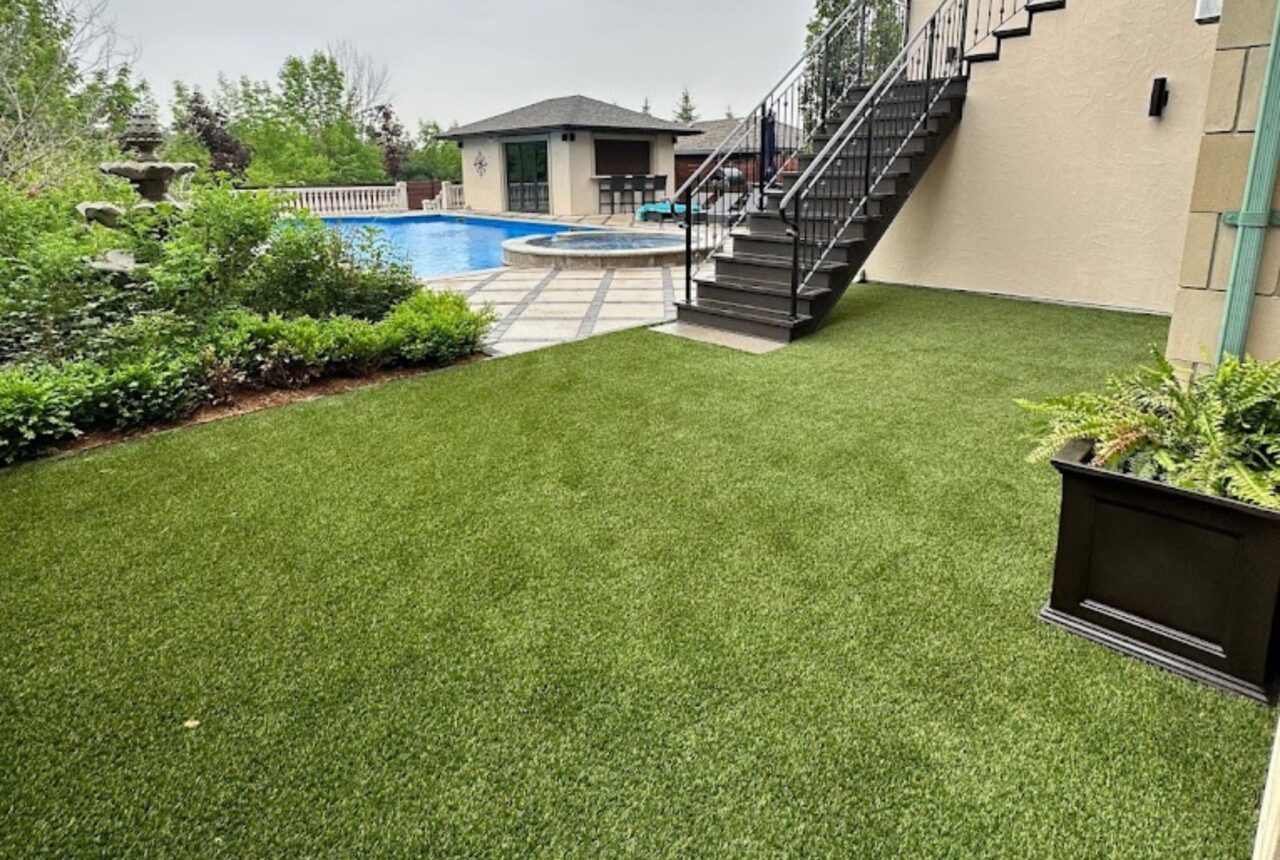
Artificial grass maintenance in Brampton is genuinely light work, but it is not zero. A synthetic lawn frees you from mowing, watering and fertiliser, and in return it asks for a quick brush now and then, the occasional rinse, and a bit of seasonal attention as Peel Region moves from spring pollen to summer heat to autumn leaves to winter snow. Follow this simple seasonal routine and your turf will look close to new for its full 15 to 25 year lifespan.
How much maintenance does artificial grass actually need?
Very little. For most Brampton homeowners, upkeep amounts to brushing the fibres against the grain every few weeks, clearing debris, and rinsing when needed. There is no mowing, no watering schedule, no reseeding and no fertiliser at any point in the year. The routine that follows is more of a light seasonal rhythm than a chore list, and each task takes minutes rather than the hours a natural Brampton lawn demands across a growing season.
Spring care
Spring is about resetting the lawn after winter. Once the snow is gone and the surface has dried out:
- Brush the whole lawn. A stiff, synthetic-bristle broom lifts fibres that were flattened under snow cover so the turf stands tall again. Always brush against the direction the blades lean.
- Rinse off pollen and grit. Brampton springs bring heavy tree pollen. A rinse with the hose clears the yellow film and any road grit that blew in over winter.
- Clear the seams and edges. Check that perimeter edges are still tight and remove any windblown debris caught at the borders.
Summer care
Summer maintenance in Brampton is mostly about heat and enjoyment. Synthetic turf can warm up in direct July and August sun, and a quick rinse with the hose cools the surface within minutes if the kids or the dog want to use it midday. That same rinse washes away dust and keeps the colour bright. If you host on the turf, a light brush after a busy weekend keeps high-traffic paths from matting. This is also the season to enjoy the payoff: while neighbours are watering under summer restrictions and mowing every week, your backyard turf stays green with almost no effort.
Autumn care
Autumn is the busiest season for turf care in Brampton because of the leaves. The city's mature maples and the tree cover around neighbourhoods like Peel Village and Heart Lake drop a lot of foliage. Left to sit and get wet, leaves can pack down and, over time, break into organic matter that feeds weeds and moss along the edges. Stay ahead of it:
- Clear leaves regularly. A leaf blower on a low setting, a plastic rake or a stiff broom all work. Avoid metal rakes that can snag fibres.
- Do a deeper clean before winter. Remove twigs and debris so nothing gets frozen into the surface once the cold sets in.
- Give it a final brush. Standing the fibres up before winter helps them shed snow and bounce back faster in spring.
Winter care
Winter care is the easiest of all: mostly you leave the lawn alone. Light snow can melt and drain through the base on its own. When you want to use the space sooner, clear snow with a plastic shovel or a stiff broom and leave a thin layer to melt off rather than scraping down to the fibres. Skip metal tools and rock salt, and if you need traction on a walkway use a de-icer rated safe for synthetic surfaces. Because there is no natural grass to smother, your turf comes through the freeze-thaw season without the brown, matted patches a real lawn shows in March.
How do I care for a pet area?
Pet zones need a little extra rinsing, and that is about it. Solid waste is picked up as usual, and a periodic hose-down flushes urine through the free-draining base so odours do not build up. For a stronger clean, a mix of water and a splash of white vinegar, or an enzyme cleaner made for turf, neutralises odour without harming the fibres. Our pet-friendly turf is built with fast drainage for exactly this reason, so a Brampton dog run stays fresh with a quick weekly rinse. If you ever notice matting in a favourite spot, a brush against the grain stands it right back up.
Frequently Asked Questions
Do I need to brush artificial grass, and how often?
Yes, brushing is the main maintenance task. Brushing against the grain every few weeks, and after heavy use, keeps the fibres upright and the lawn looking full. High-traffic paths and pet spots benefit from a slightly more frequent brush.
What is the hardest season for turf care in Brampton?
Autumn, because of leaf fall. Brampton's mature trees drop plenty of foliage, so regular leaf clearing with a blower, plastic rake or broom prevents debris from packing into the turf. It is quick work, just more frequent through October and November.
Can I pressure wash artificial grass?
You can use a gentle rinse or a low-pressure wash to clean the surface, but avoid a high-pressure nozzle up close, which can disturb the infill. For most Brampton lawns a garden hose and an occasional brush handle everything.
Want a lawn that stays this easy to look after? Reach the Artificial Grass Brampton team at (289) 210-9394 or request your free quote, and we will recommend the right turf and infill for your yard and how you use it.