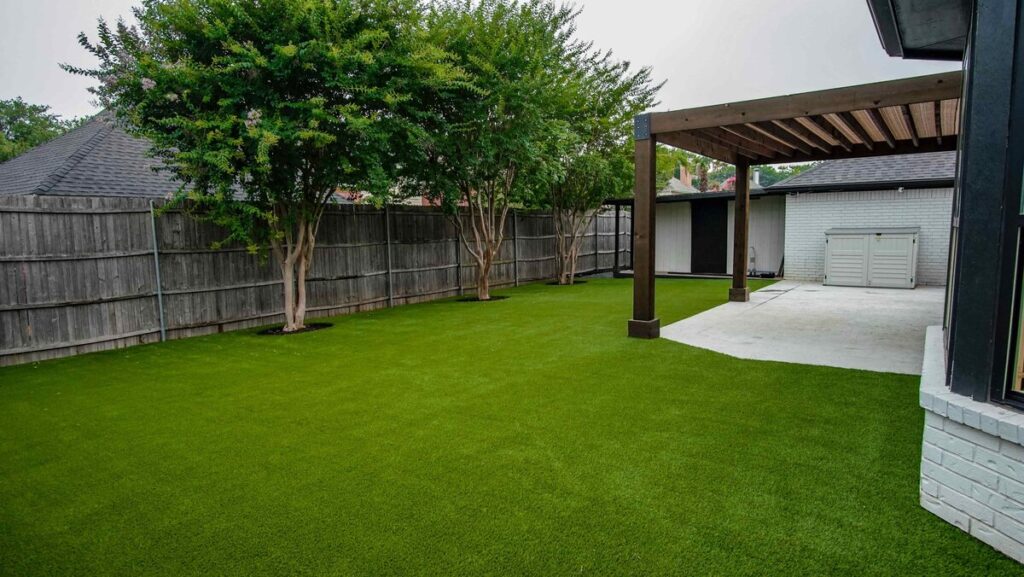
Yes, artificial grass survives Ontario winters, and Brampton winters are no exception. Quality synthetic turf is built to shrug off snow, hard frost and the repeated freeze-thaw swings that define a Peel Region winter. The fibres do not go brittle, the colour does not fade, and a properly built lawn comes through spring looking the same as it did in the fall. The details that matter are the base under the turf and how you clear snow, so let us walk through both.
Does snow and frost damage artificial grass?
No. Snow and frost do not harm synthetic turf. The fibres are made from polyethylene and polypropylene, which stay flexible in the cold and are UV-stabilised so winter sun does not bleach them. When snow settles on the lawn, it simply sits on top and melts through the free-draining base below, the same way rain does in July. You can leave a light snowfall to melt on its own, and the turf underneath will spring back upright once it thaws. There is no grass to smother, so you never get the yellow, matted patches a natural lawn shows after the snow clears.
A Brampton winter routinely drops below minus 10 and sees stretches of freezing rain and thaw. None of that changes the turf itself. What it can affect is a poorly built base, which is why the groundwork matters more here than it does in milder climates.
How does freeze-thaw affect a turf lawn in Brampton?
Freeze-thaw is the real winter test in Brampton, and it is a base issue rather than a turf issue. Brampton sits on the clay-rich Peel Plain, and clay holds water. When trapped water freezes it expands, and when it thaws it settles, and that cycle can heave and ripple any surface built on bare clay. Natural lawns get lumpy the same way. This is exactly why we install a deep, compacted crushed stone base and grade it to drain before the turf ever goes down. The stone base gives meltwater somewhere to go instead of pooling and freezing directly under the grass. Get the base right and the freeze-thaw cycle simply drains away each time the temperature rises. The Artificial Grass Brampton installers build every lawn on this kind of engineered base, and our backyard turf installations are no exception.
How do I remove snow from artificial grass?
Clearing snow off artificial grass is easier than clearing a driveway, and gentler on your back. A few simple rules keep the fibres in good shape:
- Use a plastic shovel, not a metal one. Plastic will not catch and tear the fibres or the backing.
- Leave a thin layer. Rather than scraping right down to the turf, leave a centimetre or so of snow and let it melt off. This avoids dragging the shovel edge across the blades.
- Sweep light snow with a stiff broom. For a dusting, a push broom clears it in minutes and lifts the pile at the same time.
- Let ice melt naturally where you can. Chipping at frozen turf risks the fibres. Ice on synthetic grass releases cleanly once it thaws because there is no root system holding it.
Can I use ice melt or salt on synthetic turf?
You can, but choose the product carefully. Standard rock salt used on Brampton driveways can leave a residue that builds up in the infill over time. If you need traction on a turf walkway or a pet area during an ice storm, use a de-icer labelled safe for synthetic surfaces, such as calcium chloride or magnesium chloride blends, and rinse the area with water once the weather breaks. For a pet run, this matters twice over, since dogs track salt indoors and lick their paws. Our pet-friendly turf handles winter well because it drains fast and rinses clean in spring.
Will my turf look faded or flat come spring?
It will not. One of the quiet advantages of synthetic grass in Brampton is that it skips the ugly transition weeks. A natural lawn spends March and April as a patchwork of mud, matted brown grass and slow green-up. Artificial grass stays green through the whole winter, and as soon as the snow is gone you have a clean, usable surface again, no reseeding, no bare spots from road salt spray, no waiting for the ground to firm up. A quick brush of the fibres after a long snow cover is usually all it takes to have it standing tall again.
Frequently Asked Questions
Does artificial grass get brittle in the cold?
No. Quality turf fibres stay flexible well below freezing and are UV-stabilised, so Brampton winters do not make them brittle or cause fading. The turf flattens slightly under snow load and springs back once it thaws or is brushed.
What is the biggest winter risk for a turf lawn in Brampton?
The base, not the turf. On Brampton's heavy clay, trapped water can freeze and heave a surface built on a weak foundation. A deep, compacted, well-drained crushed stone base prevents freeze-thaw movement and keeps the lawn flat for years.
Do I need to remove snow from artificial grass at all?
Not usually. Light snow can melt on its own and drain through the base. Clear it only when you want to use the space sooner, using a plastic shovel or a stiff broom and leaving a thin layer to melt off.
Thinking about a lawn that stays green through a Brampton winter? Call our team at (289) 210-9394 or request your free quote, and we will assess your drainage and recommend the right base and product for your yard.